The Invisible Skeleton – Why Composition Matters
Every great painting starts before the brush touches the canvas. Composition is the "invisible skeleton" that holds your artwork together. Without a solid arrangement of shapes, even the most beautiful colors will feel "lost."
Naturally, we focus on Visual Weight. Large objects, high-contrast areas, and human figures naturally pull the viewer's eye. The goal isn't to center everything, but to balance these weights across the frame.
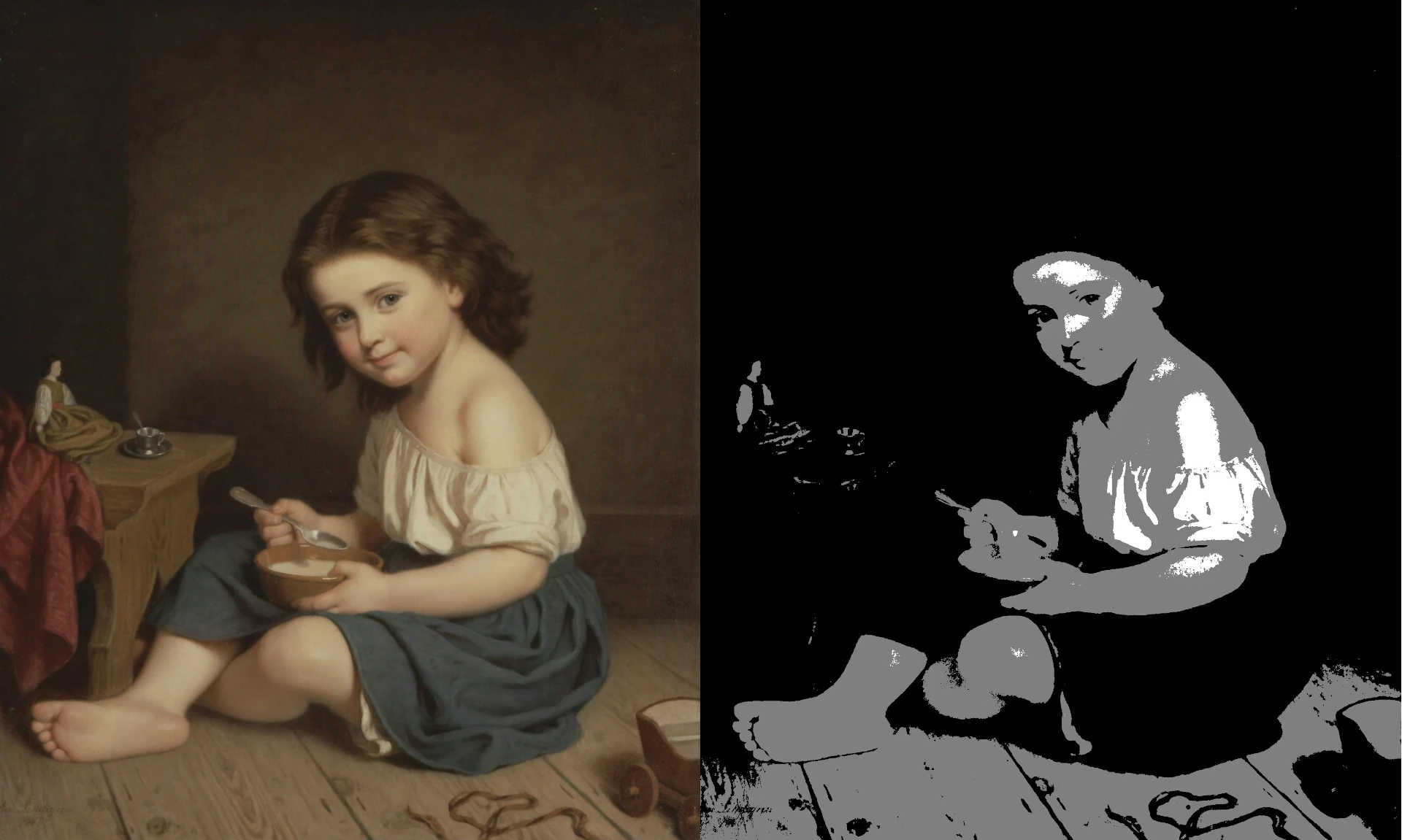
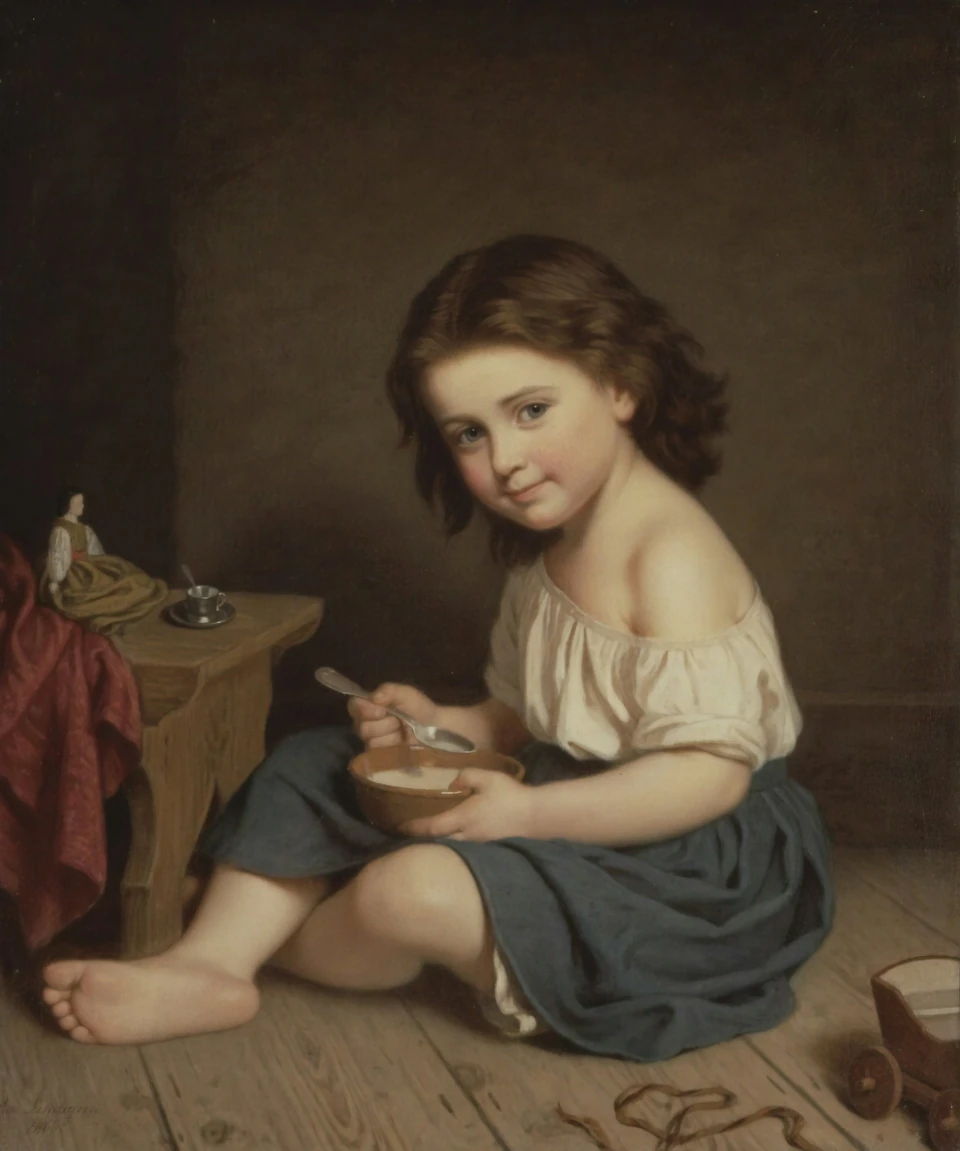
Visual weight analysis shows what is the subject as well as if the picture has depth or if it is intimate. (Breakfast. Amalia Lindegren. Nationalmuseum, Sweden.)
The Power of Three Values
In the world of painting composition, the Notan-3 (three-value Notan) is the bridge between a flat sketch and a masterpiece with true depth. While a basic two-value black-and-white study helps you find the initial "skeleton" or silhouette of your image, it often lacks the nuance required for a complex painting. By introducing a third value, a mid-tone gray, you instantly create a sophisticated hierarchy. This mid-tone acts as the "connective tissue," allowing you to group smaller, distracting shapes into larger, more restful masses that guide the viewer’s eye rather than exhausting it.
Mastering the Visual Weight of a three-value system is about balance, not just placement. In a successful Notan-3, your black, white, and gray shapes should have distinct roles. A common professional strategy is the 60-30-10 distribution: let one value (often the mid-tone) dominate 60% of the canvas to set the mood, use another for 30% to provide structure, and save the final 10% for your high-contrast focal point. This prevents your painting from looking "grayed out" or "muddy" because every value has a clear purpose and a dedicated territory on the canvas.
Beyond just aesthetics, the Notan-3 is an essential tool for Atmospheric Perspective. By assigning your darkest values to the foreground and your mid-tone grays to the distant background, you create an immediate sense of three-dimensional space on a two-dimensional surface. This "value grouping" ensures that your subject doesn't get lost in a sea of details. When you simplify your reference photo into just three values, you strip away the "noise" of color and texture, revealing whether your underlying design is actually strong enough to support a finished painting.
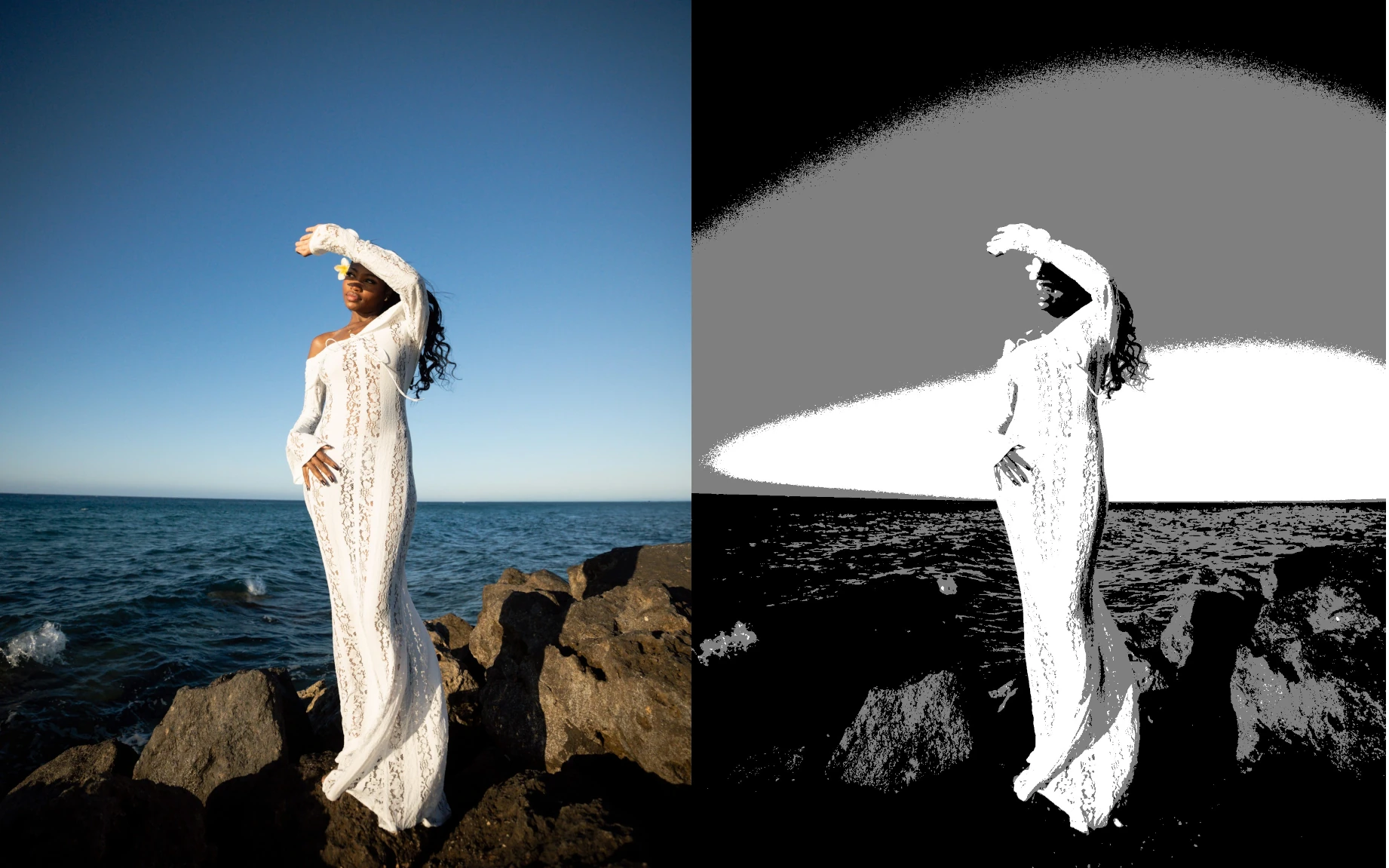
Visual weight analysis applied to a photograph delineating the depth of the image. The subject contrasts with the background, becoming perfectly readable. (gabbiistudios. Unsplash)
If you struggle to "see" these three values in your own work, technology can provide the clarity you need. I highly recommend using atelier-tools.com to audit your progress. By uploading a photo of your sketch or underpainting, you can generate an automated composition analysis report that specifically isolates your Notan-3 structure. It’s a game-changer for identifying "value drift" (those moments where your lights are getting too dark or your mid-tones are merging with your shadows) helping you fix compositional errors before they become permanent.